No products in the cart.
Welcome to Alkemist. We provides Specialty Chemicals.
Serving Areas:



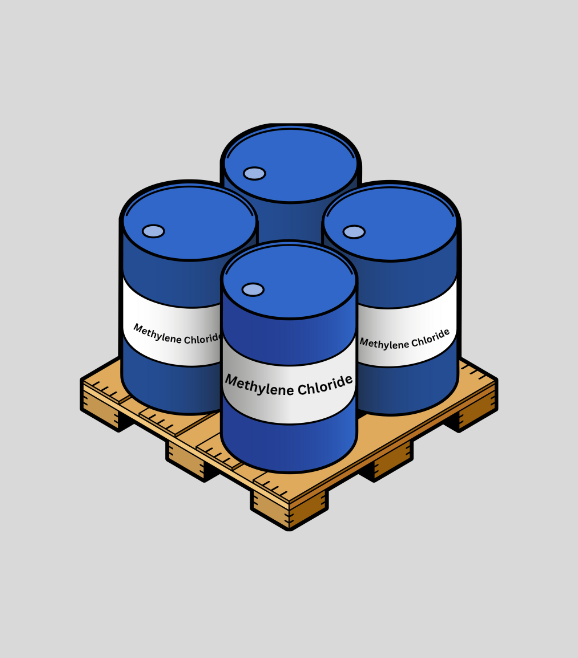
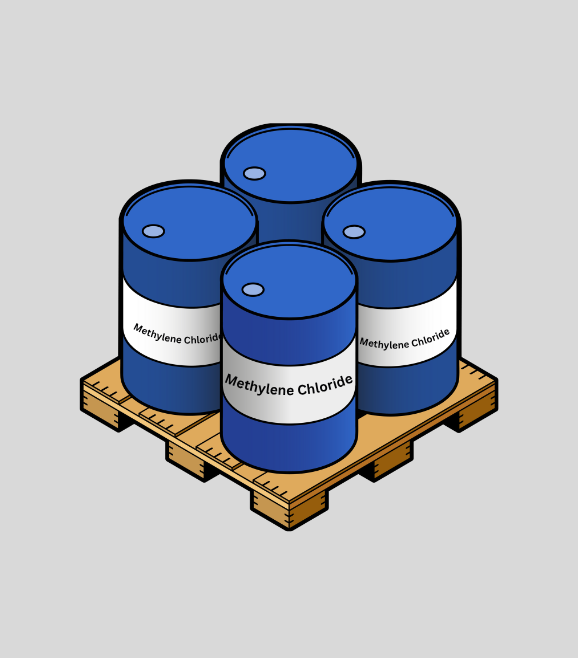
Methylene Chloride, also known as Dichloromethane (DCM), is a powerful and versatile chlorinated solvent supplied by Alkemist KSA. As a leading wholesale dealer, we provide high-purity, industrial-grade Methylene Chloride, renowned for its effectiveness as a paint stripper, degreaser, and process solvent in numerous industrial applications across Saudi Arabia, the UAE, and Pakistan.
DANGER: HARMFUL & POTENTIAL CARCINOGEN. Methylene Chloride is a volatile chemical. Inhalation of vapors can affect the central nervous system and is harmful. It is classified as a potential carcinogen. Always use in a well-ventilated area with appropriate personal protective equipment (PPE), including an organic vapor respirator, chemical-resistant gloves, and safety goggles. Request the MSDS for full safety details.
Its most common application is as a highly effective paint and varnish stripper. Its ability to penetrate and lift multiple layers of coatings makes it a preferred choice for industrial paint removal and surface refinishing.
While it is one of the least flammable of the chlorinated solvents, Methylene Chloride is still considered a fire hazard. It does not have a flash point in the conventional sense, but its vapors can form flammable mixtures in air at high concentrations and can be ignited by a high-energy source.
Dichloromethane is the systematic chemical name for the compound (di- meaning two, chloro- for chlorine, methane for the single carbon atom). Methylene Chloride is its common name. Both names refer to the exact same chemical, CH₂Cl₂.
The primary health risk is from inhaling its vapors, which can affect the central nervous system, leading to dizziness and nausea. The body also metabolizes DCM to carbon monoxide, which can reduce the blood's ability to carry oxygen. It is also a suspected carcinogen, requiring strict handling procedures.
Methylene Chloride is a very aggressive solvent and will damage or dissolve many types of plastics, including PVC, acrylic, and polystyrene. It is generally not recommended for cleaning plastics unless it is being used specifically as a solvent for welding or bonding them.